Ale vs Lager: Fermentation, Flavor, and Myths
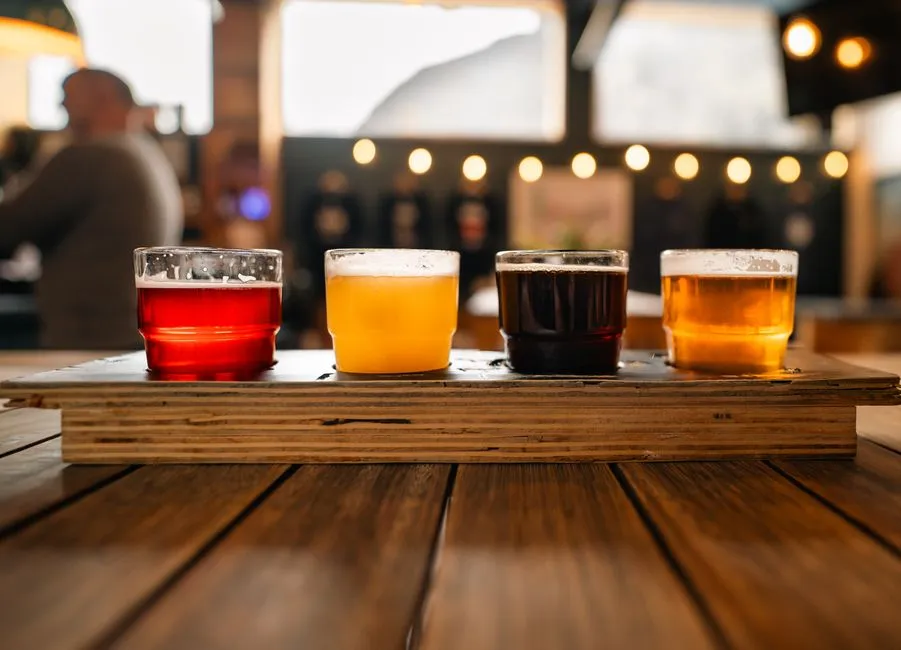
- Ale and lager describe fermentation families, not colors
- The yeast distinction is useful, but not the whole biography
- Fermentation temperature shapes expression
- Lagering means time at cool temperature
- Flavor is a style question inside the family question
- Color comes from grain, not yeast family
- Strength is independent of the ale-lager divide
- Clarity is also not a family test
- Freshness can matter more than family
- For homebrewers, sanitation outranks taxonomy
- Choose by the experience you want
Ale and lager describe fermentation families, not colors
In modern craft-beer usage, ale is fermented with top-fermenting ale yeast, while lager uses bottom-fermenting lager yeast and typically receives a period of cool conditioning called lagering. The distinction is mainly about yeast and process. Either family can be pale or dark, low or high in alcohol, crisp or rich, simple or gloriously complicated.
That immediately retires two persistent myths: lager does not mean “yellow beer,” and ale does not mean “strong beer.” A dark lager remains a lager. A pale, low-alcohol ale remains an ale. The glass has declined to coordinate its wardrobe with the taxonomy.
| Question | Ale | Lager |
|---|---|---|
| Modern craft classification | Top-fermenting ale yeast | Bottom-fermenting lager yeast |
| Typical primary fermentation | Often warmer | Often cooler |
| Typical maturation | Varies; may include cold conditioning | Usually includes lagering or cool conditioning |
| Fermentation character | Can be neutral, fruity, spicy, or expressive | Often clean, though style-dependent character exists |
| Possible colors | Very pale through black | Very pale through black |
| Possible strengths | Low through very high | Low through very high |
The yeast distinction is useful, but not the whole biography
Ale strains and lager strains belong to different brewing traditions and behave differently during fermentation. The old “top” and “bottom” labels refer to tendencies observed in classic fermentation, not an iron law that every yeast cell signs. Modern tanks, strain selection, pressure, temperature, and collection methods make the visible picture more complicated.
The Beer Judge Certification Program uses ale, lager, and wild or mixed fermentation as broad modern craft categories while acknowledging that historical and regional terminology differs. In German brewing language, for example, top-fermented and bottom-fermented can be more natural distinctions, while “lager” can also describe a conditioning method. A Kölsch may be top-fermented and then cold-conditioned; history has no obligation to fit a tidy two-column infographic.
For a drinker, the family label predicts process more reliably than flavor. For a brewer, the actual strain specification is more useful than the family alone. Two ale strains may produce notably different attenuation, flocculation, fruitiness, sulfur, and temperature responses. The yeast manufacturer's current instructions should guide the batch.
Fermentation temperature shapes expression
Many ale yeasts are run at temperatures easier to maintain in a moderately cool room, while many lager strains are fermented colder and then conditioned cold. This general pattern is why a basic ale is often recommended as a first homebrew when dedicated temperature control is unavailable.
Do not turn “often” into one magic temperature. Each strain has a recommended range, and wort composition, pitching rate, oxygenation, pressure, and temperature movement affect performance. Follow the supplier's range and measure the beer temperature, not merely the air outside the fermenter. Active fermentation generates heat, so a room that feels perfect may host a fermenter with warmer ambitions.
Too-warm or too-cold fermentation can cause problems depending on the strain. The answer is controlled fermentation, not declaring that all fruity character is ale and all sulfur is lager. Some styles welcome fermentation-derived fruit or spice. Others expect a neutral profile. A characteristic becomes a fault only in relation to the intended beer.
Lagering means time at cool temperature
The German verb lagern means to store. In brewing, lagering refers to cool conditioning that allows the beer to mature and often clarify. It can help yeast and haze-forming material settle and let rough edges integrate. It does not magically erase a contaminated fermentation, a severe recipe imbalance, or oxygen introduced during packaging. Cold is patient; it is not a publicist.
Lager styles normally build this conditioning into the process. Ales can also receive cold conditioning. That does not change the yeast family after the fact. An ale fermented with ale yeast and held cold remains top-fermented beer with cold maturation, though a brewer may use a specific traditional style term.
If brewing, cool only in equipment that can safely handle the temperature and pressure changes. A sealed vessel can develop vacuum as liquid and headspace contract, potentially pulling sanitizer or air through an airlock or deforming a vessel not rated for pressure or vacuum. Follow the equipment maker's instructions rather than improvising a cold crash in a container with the structural confidence of a yogurt cup.
Flavor is a style question inside the family question
Some drinkers use “lager” to mean a very pale, neutral, highly carbonated mass-market beer. American lager is one lager style, not the definition of the entire family. Vienna lager can show toasty, bready malt. Schwarzbier is dark yet often smooth and restrained. Doppelbock is rich and strong. Czech and German pilsners can carry distinctive malt and hop balance.
Ales are equally broad. Blonde ale can be easygoing and clean. American pale ale is hop-forward but balanced. Saison can be highly attenuated and expressive. Stout can be dry or sweet, moderate or formidable, depending on the substyle. Sourness is not an automatic ale trait, and roasted flavor is not required.
When choosing a beer, read the specific style and producer description after the family. If you want hop intensity, the pale ale versus IPA comparison is more useful than asking only whether both are ales.
Color comes from grain, not yeast family
Beer color is driven largely by the malts and other fermentables used, plus processing choices. Pale base malt can produce pale beer in either family. Darker kilned and roasted grains can build amber, brown, or black color in either family.
Color also fails as a strength meter. A black beer can be moderate in alcohol; a pale beer can be strong. Visual darkness may make roast or caramel seem likely, but even that needs the style context. Black IPA pairs dark color with hop-forward balance, while schwarzbier pairs dark color with lager fermentation and a different sensory target.
Read alcohol by volume on the package or tap list. Do not estimate it from color, bitterness, sweetness, glass shape, or the number of antlers in the label artwork.
Strength is independent of the ale-lager divide
Alcohol depends on the amount of fermentable extract and how fully fermentation proceeds, not simply which broad yeast family is used. Both ale and lager strains can make standard-strength or strong beer when the recipe and process support it. Style guidelines include overlapping strength ranges across families.
For responsible drinking, the stated ABV and serving volume matter. A 16-ounce serving is one-third larger than a 12-ounce serving because 16 ÷ 12 equals 1.333. If both beers share the same ABV, the larger glass contains about 33.3% more alcohol. Foam, haze, artisanal typography, and “sessionable” on a chalkboard do not change that arithmetic.
Alcohol carries health and impairment risks. No style is a health product, and “clean fermented” does not mean physiologically cleansing. Drink only if you are of legal age, avoid alcohol when medical or personal guidance calls for it, and never drive after drinking.
Clarity is also not a family test
Many familiar lagers are brilliantly clear after filtration or long conditioning, but unfiltered lager can be hazy. Many ales are clear, while wheat, yeast, protein, dry hopping, and intentional style choices can create haze in others. New England IPA is famously hazy yet still an ale; kellerbier may be served with natural haze yet remains lager.
Haze can also signal process trouble, but appearance alone cannot diagnose it. Stable protein haze, suspended yeast, hop polyphenols, starch, contamination, and disturbed sediment have different causes. Use the intended style, aroma, flavor, fermentation record, and packaging condition together.
Freshness can matter more than family
A fresh, properly stored pale ale may taste cleaner and more vivid than an old lager, while a carefully conditioned lager may taste more integrated than a rushed ale. Oxygen, heat, light, and time alter beer. Hop-forward styles can lose aroma especially noticeably, while some strong, dark beers are designed to develop with controlled age.
Check package dates when available and follow producer storage guidance. Keep beer away from heat and light. Brown glass offers more light protection than clear or green glass, but no bottle benefits from a sunny car. Refrigeration generally slows flavor change; it does not reverse damage already done.
Pour into a clean glass and smell before tasting. Sour, phenolic, buttery, sulfurous, or oxidized notes may be expected, tolerated, or faulty depending on the style and level. A family name alone cannot decide.
For homebrewers, sanitation outranks taxonomy
Whether wort is destined for ale or lager, everything touching it after the boil must be clean and appropriately sanitized. The homebrew sanitation guide separates those two steps and maps the cold-side contact points that are easy to miss.
Temperature control comes next. Choose yeast suited to the recipe and equipment you can actually operate. If you cannot hold a lager strain in its recommended range, do not rely on a basement weather forecast. A temperature-controlled chamber may be required. Alternatively, select an ale strain that performs well at your stable measured temperature and brew a style that suits it.
Once fermentation is complete, package according to the beer and container. The bottle-conditioning guide begins with stable gravity because unfinished ale and unfinished lager can both overpressurize bottles with magnificent impartiality.
Choose by the experience you want
Choose a specific lager style when you want its defined combination of malt, hops, fermentation profile, body, strength, and conditioning—not merely because someone promised “crisp.” Choose a specific ale style for its own balance and yeast character, not because ale is supposedly darker, warmer, or more serious.
The useful hierarchy is simple: family tells you broad fermentation tradition; style narrows the sensory target; the individual beer tells you what is actually in the glass. Ale and lager are the first two folders in a very large cabinet. Neither folder is beige, and both contain at least one bottle that will surprise the person who thought they already knew the filing system.