How to Taste Beer: A Five-Pass Beginner Guide
- How to Taste Beer Without Pretending to Be a Judge
- What Do You Need for a Beer Tasting?
- Should Beer Be Ice-Cold for Tasting?
- Pass 1: Smell the Beer While the Aroma Is Fresh
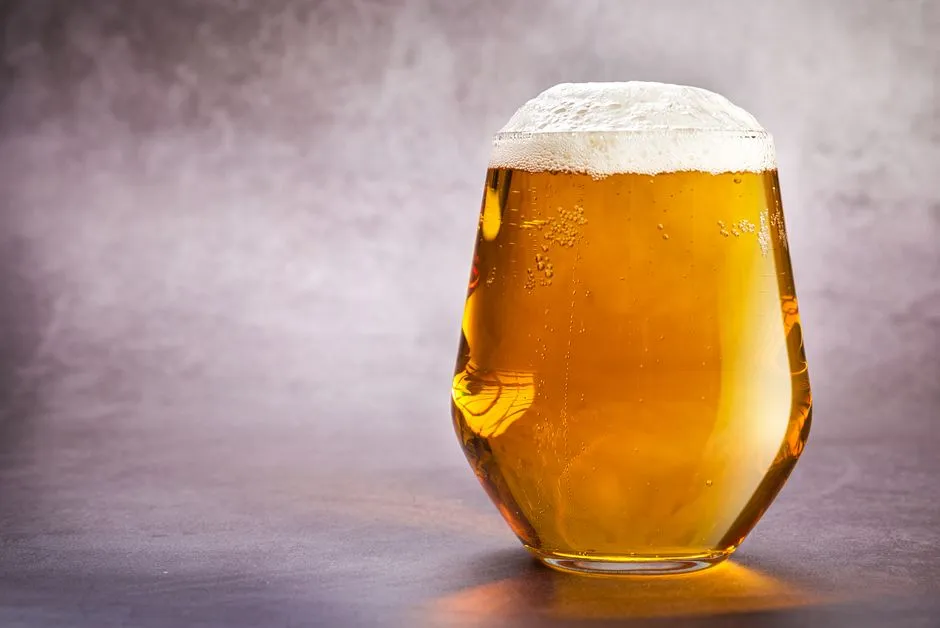
- Pass 2: Look at Color, Clarity, and Foam
- Pass 3: Taste Flavor in Three Moments
- Pass 4: Describe Mouthfeel, Not Just Flavor
- Pass 5: Form an Overall Impression
- Use This Five-Line Beer Tasting Card
- How Do You Compare Several Beers Fairly?
- What If Your Tasting Notes Disagree With Someone Else’s?
- Sources
How to Taste Beer Without Pretending to Be a Judge
To taste beer deliberately, pour a modest sample into a clean glass, smell it promptly, inspect its appearance, take a small sip, and note flavor, mouthfeel, finish, and overall balance. Describe what you actually perceive before deciding whether you like it. One beer, five passes, a few plain words. You do not need a certificate, a velvet jacket, or the ability to say “phenolic” without blinking.
The point is not to turn a pleasant drink into an exam. It is to notice why two beers that look similar can feel completely different, or why a familiar beer changes as it warms. Taste is personal; a structured method simply makes your impressions easier to repeat and compare.
This guide is for adults of legal drinking age. Use small samples, pace the session, keep water available, and never drive after drinking. Spitting is normal in sensory evaluation and reduces alcohol intake. Skip alcohol where health, pregnancy, medication, recovery, work, or transport makes it inappropriate, and follow current medical guidance for your circumstances.
What Do You Need for a Beer Tasting?
Start with less equipment than a homewares catalogue would prefer:
- one clean, odor-free glass for each beer, or a rinsed glass between samples;
- a small pour with enough empty space above it to collect aroma;
- water and plain, unsalted crackers or bread;
- a notebook or the tasting card below;
- good neutral light and a room without perfume, smoke, cooking aromas, or scented candles;
- the package or tap-list details, kept out of sight until after your first notes if you want to reduce expectation bias.
The Brewers Association’s American Craft Beer Guide recommends a very clean glass with headspace and says an inward-curved rim helps collect aroma. A tulip or small wine glass works well, but a spotless ordinary glass beats a glamorous one carrying dishwasher fragrance. Do not freeze the glass: ice, freezer odors, and detergent residue can alter the sample.
Pour modestly rather than filling to the rim. A smaller amount leaves room to swirl gently and makes side-by-side comparison more responsible. If a can or bottle is bulging, cracked, leaking, or behaving as though it is under abnormal pressure, do not open or handle it casually. Isolate it from people and follow the producer or local waste authority’s safe-disposal direction.
Should Beer Be Ice-Cold for Tasting?
Not every beer should be served at one universal temperature. The Brewers Association guide gives broad examples: pale lagers at 38–40°F (3–5°C), dark lagers at 45–50°F (7–10°C), and English-inspired ales at 50–55°F (10–13°C). Those are presentation ranges from that guide, not laws for every product.
Start with the producer’s serving guidance when it is available. Very cold beer can mute aroma; letting the sample warm slightly may reveal more. Excessive warmth can make alcohol, sweetness, or oxidation seem more prominent. Write the approximate temperature if you are comparing the same beer on different days. Otherwise, “cool, then warming” is more useful than a heroic argument over one degree.
Pass 1: Smell the Beer While the Aroma Is Fresh
The Beer Judge Certification Program (BJCP) evaluation procedure smells beer immediately after pouring, then returns to aroma after the appearance check. That sequence matters because some aromas are fleeting.
Bring the glass near your nose and take two or three short, comfortable sniffs. Swirl gently if the beer is quiet, then smell again. Do not inhale so aggressively that the exercise becomes nasal weather.
Begin with broad families:
- Malt: grain, bread, toast, biscuit, caramel, cocoa, coffee;
- Hops: floral, herbal, spicy, citrus, pine, resin, tropical fruit;
- Fermentation: clean, fruity, spicy, tart, sulfur-like;
- Other additions: fruit, herbs, smoke, coffee, chocolate, or whatever the label declares.
Write intensity as well as identity: low, medium, or high is enough. “Medium citrus, low bread, faint pepper” is a better note than “complex.” Complex tells you that several things happened; it does not identify any of them.
Avoid diagnosing the recipe from aroma alone. A fruit-like note does not prove fruit was added, and a smoky impression does not name a particular malt. Record the perception first. Check ingredients or style context later.
Pass 2: Look at Color, Clarity, and Foam
Hold the glass against a plain, well-lit background. Note:
- color, from pale straw through amber, brown, or black;
- clarity, including whether haze appears uniform or contains particles;
- foam color and texture;
- how quickly the head forms, falls, or leaves patterns on the glass;
- visible carbonation rising through the beer.
The BJCP identifies appearance, aroma, flavor, and mouthfeel as the basic sensory building blocks of a style description. Appearance is therefore evidence, but it is not a verdict. Haze can be expected in one style and unexpected in another. A dark beer is not automatically strong, and a pale beer is not automatically light in alcohol or flavor.
Use the named style as context rather than treating it as a costume inspection. The BJCP explicitly says its style guidelines are guidelines for structured competition judging, not rigid commercial product specifications. Our ale versus lager guide makes the same useful distinction: visible color cannot tell you the fermentation family by itself.
Pass 3: Taste Flavor in Three Moments
Take a small sip and let it move across your mouth. Notice the flavor as a short sequence:
- First impression: sweetness, acidity, bitterness, roast, or a prominent added flavor.
- Middle: malt, hops, fermentation character, and how those elements balance.
- Finish: what remains after swallowing or spitting, how long it lasts, and whether the ending feels clean, dry, sweet, bitter, tart, warming, or astringent.
The BJCP procedure similarly asks evaluators to consider initial flavor, intermediate flavor, aftertaste, and conditioning. You can borrow that timeline without assigning a competition score.
Separate intensity from enjoyment. “High bitterness, lingering grapefruit, dry finish” describes the beer. “I enjoy this” describes your response. Both matter, but they answer different questions. Keeping them apart helps when a well-made style is simply not your style.
If you are comparing pale ale and IPA, ask whether malt shares the center or mainly supports hops, how dry the finish feels, and how long bitterness stays. Do not let the label answer before the glass does.
Pass 4: Describe Mouthfeel, Not Just Flavor
Mouthfeel is the physical impression. Check:
- body: light, medium, or full;
- carbonation: low, moderate, high, soft, prickly, or creamy;
- texture: smooth, silky, oily, powdery, or rough;
- warmth: whether alcohol creates a gentle warming sensation or a harsh burn;
- astringency: a drying, puckering sensation rather than a taste;
- finish weight: crisp and quick, or coating and persistent.
Mouthfeel explains why two beers with similar aromas can drink differently. A dry, highly carbonated beer may feel brisk; a fuller beer with softer carbonation may seem round even at similar alcohol strength. These are observations, not health or strength estimates. Read the stated ABV and serving size rather than using warmth, sweetness, or smoothness as an impairment meter.
Pass 5: Form an Overall Impression
Now ask what holds the beer together. Which element leads? What supports it? Does the finish invite another analytical sip, or does one sensation crowd everything else? If the beer names a style, compare your notes with that style’s current description after you have recorded the sample on its own terms.
An overall impression can be two sentences:
Medium orange and pine aroma over light toast. Firm bitterness leads, carbonation keeps the finish brisk, and the malt remains supportive rather than sweet.
That note is specific enough to recognize later. “Nice IPA” is sincere but leaves your future self no clues.
You do not need to score the beer. Competition judging uses a defined scoring system and context; a casual tasting can stop at accurate description, preference, and one question you want to explore next.
Use This Five-Line Beer Tasting Card
Copy this compact card for each sample:
| Pass | What to record | Example format |
|---|---|---|
| Aroma | families plus intensity | medium citrus, low toast, faint spice |
| Appearance | color, clarity, foam | deep gold, slight haze, lasting white head |
| Flavor | first, middle, finish | soft sweetness; citrus hops; dry bitter finish |
| Mouthfeel | body, carbonation, texture | medium-light, lively, smooth |
| Overall | lead, support, balance | hops lead; clean malt supports; finish is firm |
These examples demonstrate note structure, not the expected profile of every beer. Leave a field blank when you cannot identify it. Honest uncertainty is better than selecting “elderflower” because someone nearby said it with confidence.
On a second pass, add package details, named style, ABV, and date information. Then compare your sensory note with the producer’s description or the relevant BJCP guideline. Agreement is not the goal; learning what a term means in your own perception is.
How Do You Compare Several Beers Fairly?
Limit the number and keep pours small. Arrange samples from lower intensity toward higher intensity when possible: delicate before heavily roasted, strongly hopped, smoked, sour, or high-alcohol beer. This editorial sequence gives quieter samples a better chance to be noticed before more forceful ones tire the palate.
Use the same glass shape, approximate volume, environment, and note format. Taste one pass across all samples rather than finishing one full glass before meeting the next. Water and plain bread or crackers help reset the palate.
For a blind comparison, have another person label the bottoms of glasses. Blind means you do not know which sample is which; it does not mean stumbling around the table. Reveal the labels only after the first complete notes.
If you brewed the beer yourself, separate sensory evidence from process diagnosis. “Butter-like aroma” is an observation. “Fermentation temperature caused it” is a hypothesis requiring process records and more evidence. Review the brew log, packaging history, and storage before changing a recipe. For packaged homebrew, follow the pressure controls in our bottle-conditioning guide and never open suspect bottles as a tasting experiment.
What If Your Tasting Notes Disagree With Someone Else’s?
Different people can perceive the same beer differently. Compare the exact observation, not the status of the observer: “I get medium grapefruit and you get low pine” creates a useful conversation. “My palate is correct” mostly creates a longer evening.
Check whether you sampled at the same temperature, from equally clean glasses, and at the same point after pouring. Ask the other person what the descriptor reminds them of. A shared reference can clarify language without forcing agreement.
Repeated notes are more informative than one dramatic tasting. Try the same beer on another day, store it as the producer directs, and compare without peeking at the old note. The habit worth developing is not certainty. It is attention.
Sources
- Beer Judge Certification Program — Beer Evaluation and the Judging Process (accessed September 4, 2026). Supports the structured pour, aroma, appearance, flavor, mouthfeel, and overall-impression sequence and the initial, intermediate, and aftertaste framework.
- Beer Judge Certification Program — Introduction to the 2021 Guidelines (accessed September 4, 2026). Supports the four sensory building blocks and the boundary that style guidelines serve judging rather than acting as rigid commercial specifications.
- Brewers Association — American Craft Beer Guide (accessed September 4, 2026). Supports the clean-glass and headspace guidance, inward-curved glass recommendation, tasting sequence, and quoted broad serving-temperature examples.